How to reduce risk factors of eating leftovers
- Add acidic ingredients to your food, including lemon juice, vinegar, etc. Acidity creates a hostile environment for bacteria growth, remember?
- Store them in the fridge within 2 hours after cooking. Bacteria can quickly multiply under room temperature.
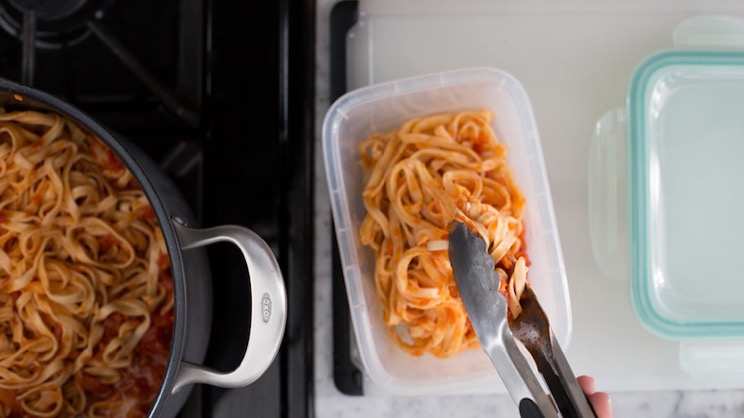
- Store in an airtight container because oxygen can encourage the growth of bacteria.
- Put in the right place. The back of the fridge tends to be cooler than the front.
- Transfer to the freezer as soon as possible if it can't be consumed in time. A common myth is that the freezing cold environment kills bacteria. Wrong, bacteria growth only slows down in the freezer. In general, leftovers can last around 3 months in the freezer.
- Observe, smell, or taste. Firstly, look for signs of mold, which can be in various colors. Some food may also have a slimy film. If the leftovers smell rancid, they are no longer edible. If their flavor is off when you take a bite, spit it off immediately. In either case, you should desert the food immediately.
- Reheat thoroughly. Ideally, reheat the leftovers until the internal temperature reaches 165 °F (74 °C). But not everyone has a food thermometer or has the time to heat up the oven to 165 °F, right? Instead, if your food is not warm enough toward the middle, heat them for an extra minute or so to avoid potential food poisoning.
Was this page helpful? Give us a thumbs up!
+1Helpful ( 53 )
Useless ( 5 )
Submit
Thank you for your feedback!